Wholesale for poster shops: getting into interior stores without losing your margin
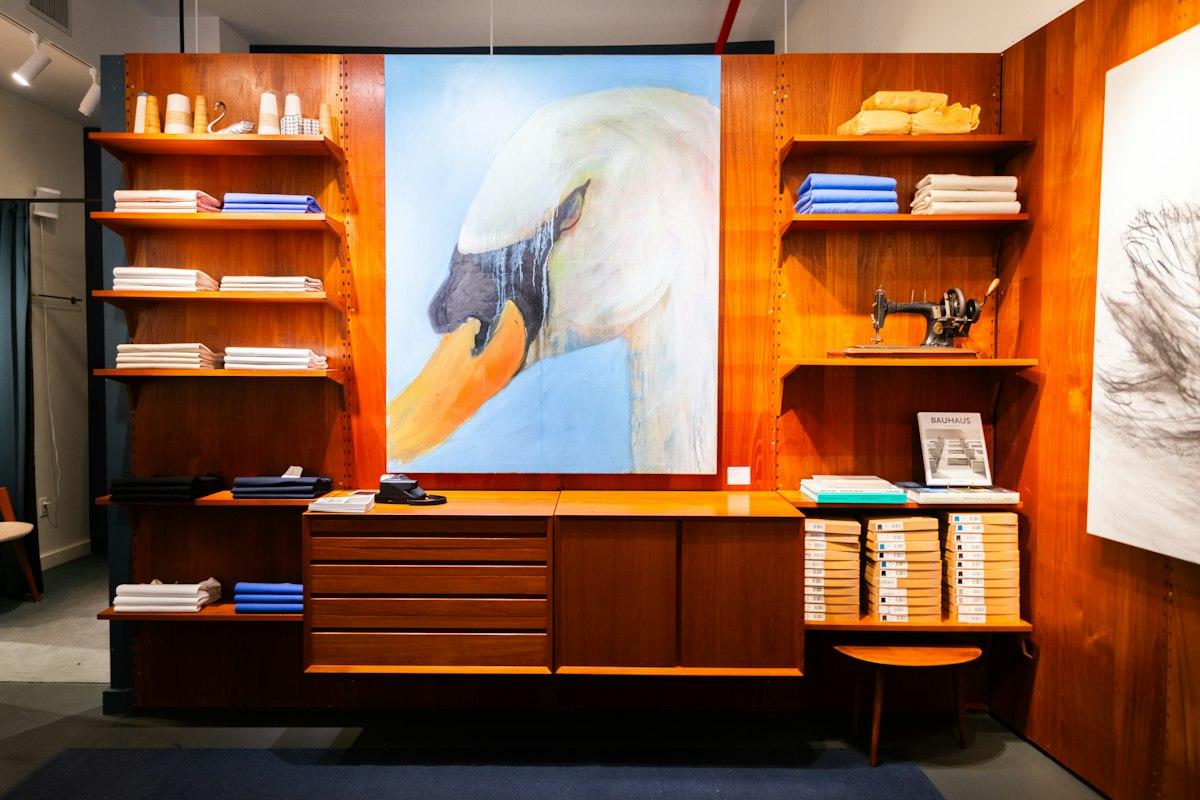
Four posters. In the example below, that is how many you have to sell to an interior store to earn what one poster brings in on your own site. Most shops that say yes to wholesale have never run that sum.
None of this is an argument against wholesale. Stores put your work in front of people who would never find your webshop, and a good account reorders quietly for years. It is an argument for deciding the terms before the first email, not after the first order.
Work out your wholesale floor first
Say a poster sells for 40 USD on your own site and costs you 12 USD to print and pack. Selling direct, you keep 28 USD. The usual wholesale arrangement is that the store pays about half of its shelf price, so the store pays you 20 USD and keeps the rest. You keep 8 USD.
That is the four-to-one gap. One direct sale equals 3.5 wholesale sales, so call it four. If a store wants ten posters, you are trading about two and a half direct sales for a lot more admin.
Wholesale orders still have advantages. They arrive in batches, with no ad spend, no customer service emails and often one shipment instead of ten. But you should know your floor before you negotiate. Write down the lowest price per poster at which an order still pays for the time it takes.
Sell a range, not your whole catalog
A store with a white shelf and a living-room wall does not want 200 designs. It wants six to ten that sit well together, in two or three sizes, with a clear logic: one colour family, one subject, one mood.
Pick the designs that already sell in your shop without discounts, then check that they look like a set when laid side by side. If they do not, swap one out. A tidy line sells better in a store than a bestseller list does.
Keep your riskiest and most personal designs for your own site. A store that stocks them and cannot sell them will not reorder anything.
Put the terms in writing, and keep them boring
Most wholesale disputes come from three things nobody wrote down. Write them into a one-page terms sheet and attach it to every quote.
- Minimum first order, for example ten posters across at least four designs.
- Payment terms. Prepayment for a first order is normal. Net 30 for repeat accounts is a reasonable reward.
- Who pays shipping, and what happens to a poster that arrives damaged.
Add a suggested retail price and a line that says stores may not sell below it online. Without that line, a store can undercut your own webshop by 20 percent and you have no standing to complain.

Photo by Blake Wisz on Unsplash
Give the store something to sell with
An interior store owner is not a poster expert. They are good at rooms. Send the order with a small card per design that says the size, the paper, the print method and one sentence on where it works at home, for example above a sofa or at the end of a hallway.
Also send photos of the posters hung in real rooms. A flat file on a white background does not help a shop assistant who has to sell the poster to someone holding a tape measure. Buyers in stores ask the same size questions as buyers online, and the store has fewer ways to answer them.
If your shop offers a preview at home tool, put the code on the card. A shopper can scan it, see the poster on their own wall and come back to the store to buy. The honest limit is that it only helps once they already like the picture, so it does not replace good photos.
Protect your own shop while you grow
Stores that sell your posters also compete with you on search results, so keep a few things exclusive. Limited runs, signed prints and the largest size are the usual choices. These give people a reason to visit your site even after they have seen the work in a shop.
Watch the price gap as well. If the shelf price in the store is far above your webshop price, customers will notice, and the store will stop ordering. Keep the suggested retail price equal to your own price, and let the store keep its half.
Start with three stores, not thirty
A mass email to 300 stores gets you silence and a few discount requests. Three personal emails to stores whose walls already look like your posters get you a conversation.
For each one, name a specific shelf or corner, and attach your terms sheet and a link to six designs. Offer to send a trial order of ten posters on prepayment. Follow up once after a week and leave it there.
Then look at the first reorder, which is the real signal. A store that reorders within eight weeks has found the posters sell. A store that does not has told you which designs to drop from the range.
Go back to the four-to-one sum when each account comes in. If a store reorders ten posters a month, that is the profit of two or three direct sales, with almost no admin. That is a good account. If it asks for fifty posters at a deeper discount, rerun the numbers before you answer.
FAQ
What discount should a poster shop give wholesale customers?
The common arrangement is that the store pays around half of its retail price. Work out your own margin at that price before you agree, and set a floor below which you will not go.
What is a good minimum first order for wholesale posters?
A minimum of around ten posters across at least four designs works for many shops. It is large enough to justify packing and shipping, and small enough for a store to try without much risk.
Should poster shops let stores sell below the suggested retail price?
No, at least not online. A written terms sheet that sets a minimum advertised price stops a store from undercutting your own webshop.
Do I need a separate wholesale catalog for stores?
Yes. A curated range of six to ten designs with sizes, wholesale prices and photos in real rooms is easier for a store to say yes to than your full webshop.