Gallery Walls With Posters: The Upsell Most Shops Miss
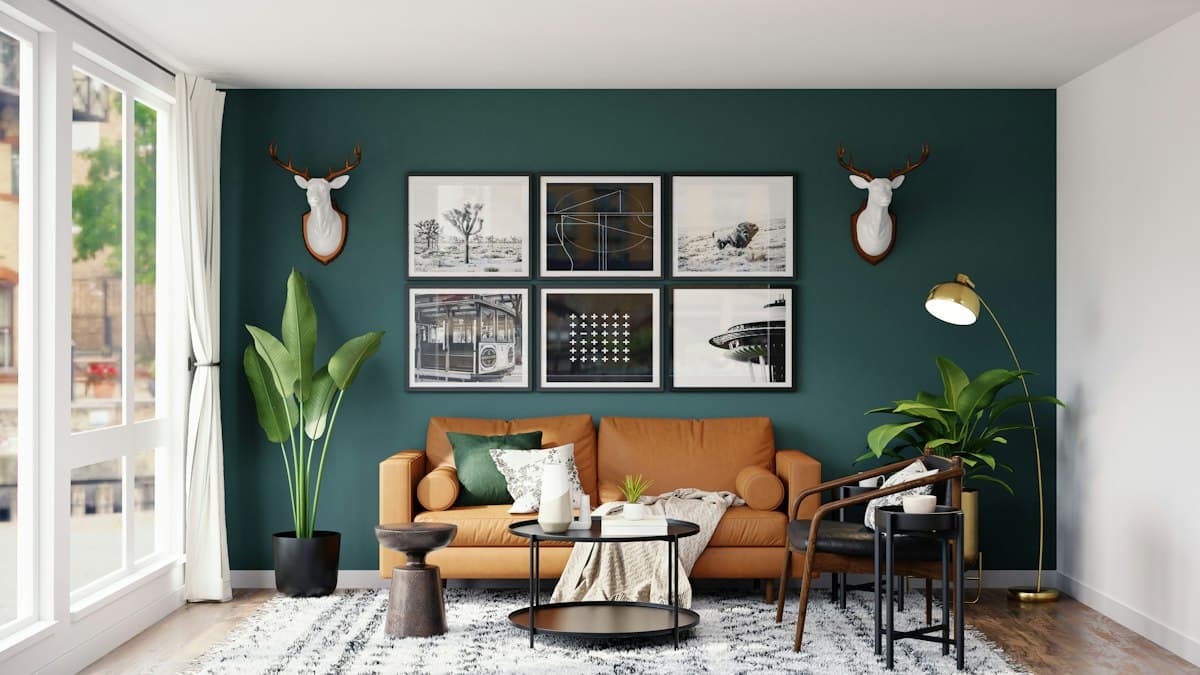
Three posters instead of one turns a 25 dollar order into something closer to 70, and the second and third print barely add to your printing cost. That gap is the entire case for gallery walls, and most poster shops leave it sitting on the table.
A gallery wall is nothing more than two or more posters displayed together as one composition. Customers already build these at home: a botanical print next to a travel poster next to a black-and-white portrait, hung as a grid above the sofa. Your shop just isn't asking them to buy it that way.
Walk through a typical poster shop and you see the same pattern everywhere. One product page, one image, one size selector, one "add to cart." The customer has to do the curation work themselves, in their head, across ten open tabs. Most won't bother. They buy the one poster they're already sure about and leave.

Photo by Yanhao Fang on Unsplash
Why this upsell gets skipped
A single product page is a template you build once and reuse for every poster in the catalog. A gallery wall set means deciding which posters actually work next to each other, in which sizes, which is a curatorial decision rather than a technical one. It takes taste, and taste doesn't scale the way a collection page does.
So most shops skip it and stick to what's easy: one poster, one page, one price.
The shops that do it well pre-build the sets. Three posters that share a palette or a theme, sold as a bundle with a modest discount, maybe 10 to 15 percent off buying the same three separately. The discount matters less than the decision it removes. The customer isn't choosing three posters anymore. They're choosing one wall.
What actually makes a set sell
Size variation does more work than color matching. A grid of three identical 50x70 prints looks like a spreadsheet. Mix one large anchor piece with two smaller ones, and it reads as an actual wall, not a product bundle someone assembled in five minutes.
Odd numbers beat even ones almost every time. Three or five posters feel deliberate. Four feels like the shop ran out of ideas at three and added a fourth to round up the price.
Framing is the other half of the sale. A gallery wall with mismatched frame colors and widths looks accidental, even when the posters themselves are well chosen. Offer the set with a single frame finish as the default, then let the customer swap individual frames if they want a mixed look.
Where to put it
The obvious spot is the product page: "complete the wall" under the poster the customer is already looking at, showing two others that pair with it. The less obvious spot is checkout. Someone who has already committed to one poster is a far easier sell on a second and third than a browser who hasn't bought anything yet.
Scale is the part a product photo can't settle, and it matters more here than on a single poster, because the customer is trying to picture spacing and proportion across three separate frames instead of one. This is where a Blenda link earns its place in the flow: the customer sees the whole set, at true size, on their own wall, before they add anything to the cart.
None of this needs new stock. It's the same posters already in the catalog, reorganized around a decision the customer was going to make on their own wall anyway.
Three posters, sold as a set, and the printing cost of the extra two is nowhere near what the order value goes up by. That's the upsell. It just has to be offered before the customer leaves to figure it out on their own.

FAQ
What is a gallery wall in poster shop terms?
A gallery wall is two or more posters displayed together as one arrangement, usually sold as a curated set that mixes sizes rather than repeating the same one.
How many posters should be in a gallery wall set?
Three or five works better than an even number. Odd counts read as deliberately curated rather than randomly added to round out the price.
Should a gallery wall set include a frame?
Offering one default frame finish for the whole set keeps the arrangement looking coherent, while still letting the customer swap it if they want a mixed look.
Does bundling posters actually raise average order value?
Yes, because the main cost in a poster order is the first print and the shipping. Each additional poster in the same order adds far less cost than it adds in price, which is why the bundle discount can stay modest.